Thursday, June 5, 2014

It's Back

There are currently some patches of discolored Bentgrass on the tees and fairways.  So, does that mean the soil is dry?  While off-color turf certainly may be dry, there are several other possible causes as well.  This would include dormancy, insect damage, or a turf disease. 

This last option is the cause of what we're presently seeing on the Bentgrass.  Specifically, this is a root-borne pathogen called Take-All Patch.  With diseases that attack the roots, by the time you see it on the foliage, the damage is done. 

Because we've had this disease show up to some extent each spring, we took a preventive approach to controlling it by making some applications of Manganese earlier in the year to areas where we typically see damage.  Unfortunately, we have seen little difference in the treated areas from untreated check plots.

The good news is that while Take-All Patch may temporarily discolor the turf, it rarely lives up to its name.  Like most turf diseases, it operates in a relatively narrow temperature range--once we get into warmer summertime temperatures, Take-All is no longer active.  Going forward, we will look at other treatment options, including the use of fungicides to prevent this disease from occurring.
A patch of Take-All Patch on #5 tee.

Friday, May 30, 2014

Farewell to an Old Friend

How many times have you crossed the bridge on #2 with someone playing Laurel Creek for the first time, and seen them duck their head as you drive under the large, overhanging limb?  Over the years, it's happened to me dozens of times, as I've taken someone on a tour of the course.  Inevitably, they comment about this unique feature.

From a maintenance perspective, several pieces of equipment are too tall, and can't clear the bottom of the branch.  In some cases, this adds time to tasks, as the machinery has to take the long way around to get to #2 or #12.  This can be a bit of hassle at times, but weighed against the positives of this natural feature, we'd never complain about the extra driving the limb has forced us to do.

Sadly, the brief, but strong storm we had Tuesday night snapped this large limb from the tree.  The winds were so powerful they threw this branch well clear of the bridge, landing in the wetlands.
The rest of the tree will be evaluated by an expert to see if it can remain, or must be removed.

Friday, May 23, 2014

Solid Tining Fairways

A few times during the year, we use our heaviest aerifier, equipped with solid tines, to aerify the fairways.  There are several benefits this machine provides.

First, the solid tines create a much deeper hole than a conventional core aerifier--up to 8" in depth.  This solid tine helps to fracture the compacted soil, creating channels for root growth and water infiltration. 

Once the surface dries out, water often times just runs off, and the soil is very difficult to re-wet.  The solid tine holes allow the water to move down from the surface, then laterally, helping to keep a firmer surface, while getting the water where it needs to go.

While you might expect the surface disruption from this large piece of equipment to be a problem, once mowed, the fairway is back in good shape.  Typically, in two to three days, you'd have to look very closely to even see the holes.

#1 fairway being aerified with solid tines.


#1 fairway,  four hours later, after being cut.

Friday, May 16, 2014

Ballmark Repair

Please start the 2014 golfing season with proper golfer etiquette.  One of the player's responsibilities is repairing their ball mark.

The illustration below (courtesy of the GCSAA) provides a quick refresher on how to properly repair a ball mark.

Remember, as you walk onto the putting surface, head to your ball mark first, then to your ball.  Your help in keeping the greens smooth will be appreciated by those who play after you.

Friday, May 9, 2014

Lending a Helping Hand

As you may know, Laurel Creek is the home course for Moorestown High School, and Moorestown Friends School golf teams.  In a show of thanks for being able to use the course, team members spend an afternoon filling divots for us. 


The Moorestown High School golf team works on #1 fairway. 
 
This gesture of giving back to the Club is certainly appreciated.

Friday, May 2, 2014

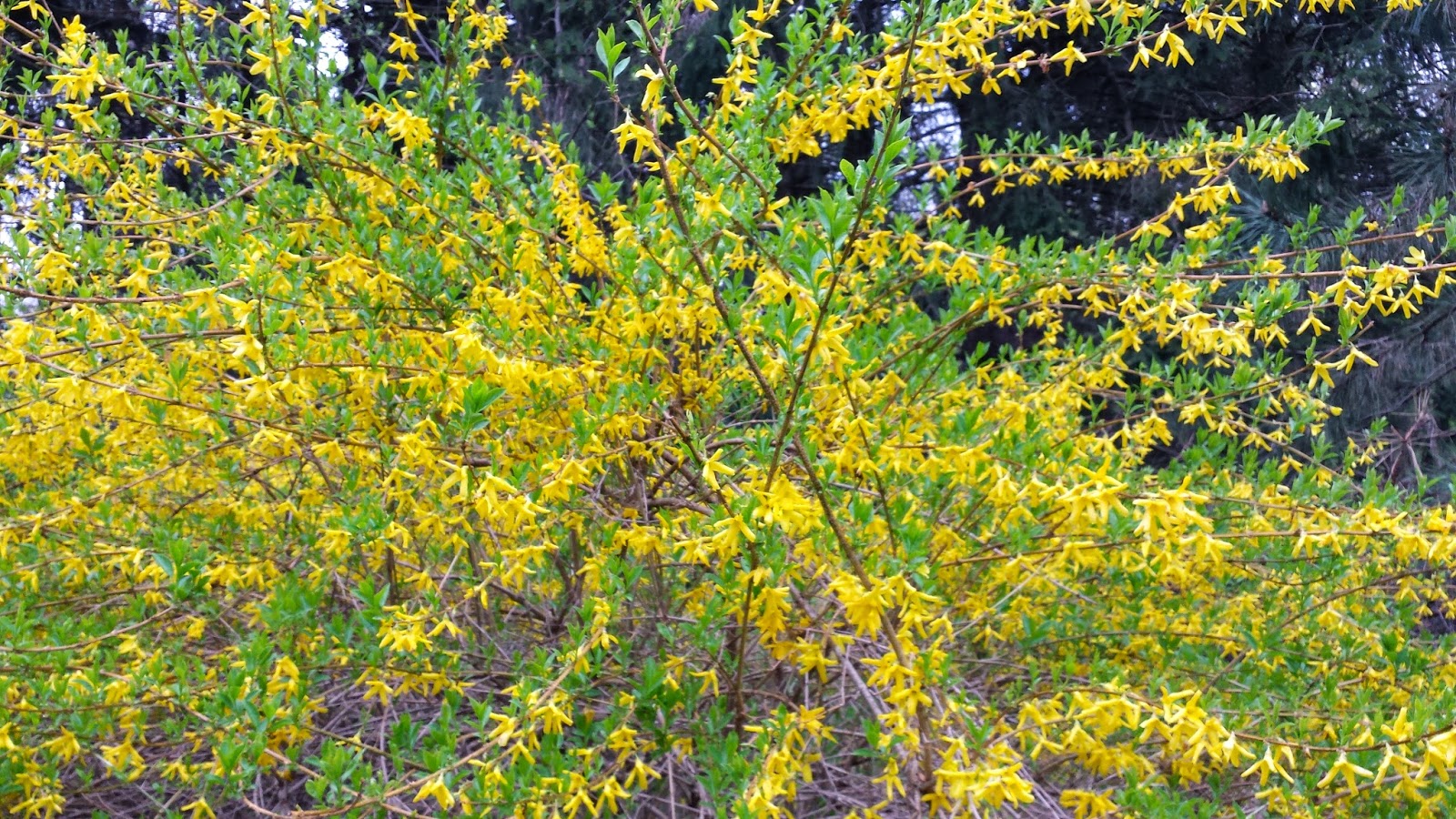
Using Forsythia as a Forecaster

The Annual Bluegrass Weevil is probably the most troublesome insects pest we have to deal with.  One approach to managing these little turf eaters is to target the adults in the spring as they move from their over-wintering sites, and prior to egg-laying.

There are several tools we use to track their movements, including the PVC pitfall traps located around the course, soap flushes to bring them to the surface, and on-line assistance from other area courses who are monitoring weevils. 

One additional method we use is a phenological indicator.  Typically, when Forsythia are half gold-half green, adult weevils are on the move.  So, if it's been cold, and Forsythia bloom is late, so too will the weevil movement.  Conversely, if we've had a warm early spring and the flowers are blooming early, it's generally safe to assume that weevils will be ahead of schedule.
Looks like it may time to go on the warpath for weevils.
 

Thursday, April 24, 2014

A Day at the Beach

Three weeks ago, we began prepping the bunkers for the Matrix bunker liner.  Old sand was removed, old drain lines were cleaned and replaced, and new drainage was added where needed.  On #9 fairway bunker, over 400 feet of additional drainage was added.
With 15 feet of elevation change in this bunker, good drainage beneath the asphalt is a key to preventing sand from moving during heavy rains.

Last week, we completed the installation of the porous asphalt liner on four bunkers.  That left the mere task of placing 360 tons of sand in these bunkers.  
#9 prepped with new drainage, prior to asphalt installation.

The two bunkers on #17 are finished, as is the greenside bunker on #10.  This leaves only the fairway bunker on #9.  However, at 11,000 square feet,  this bunker will take over 400,000 pounds of sand.

#9, asphalt completed.  50 tons of sand installed...and counting.